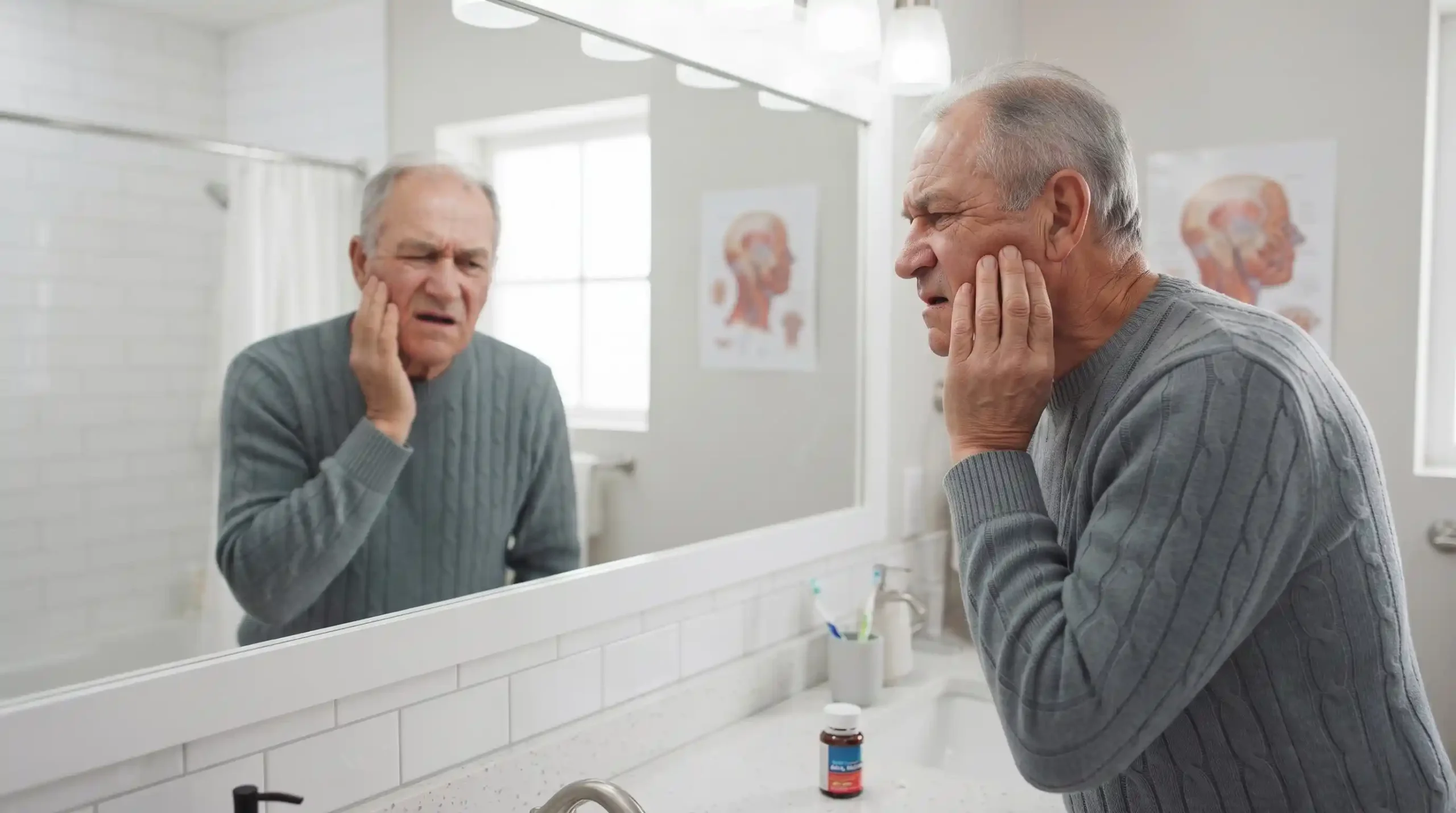
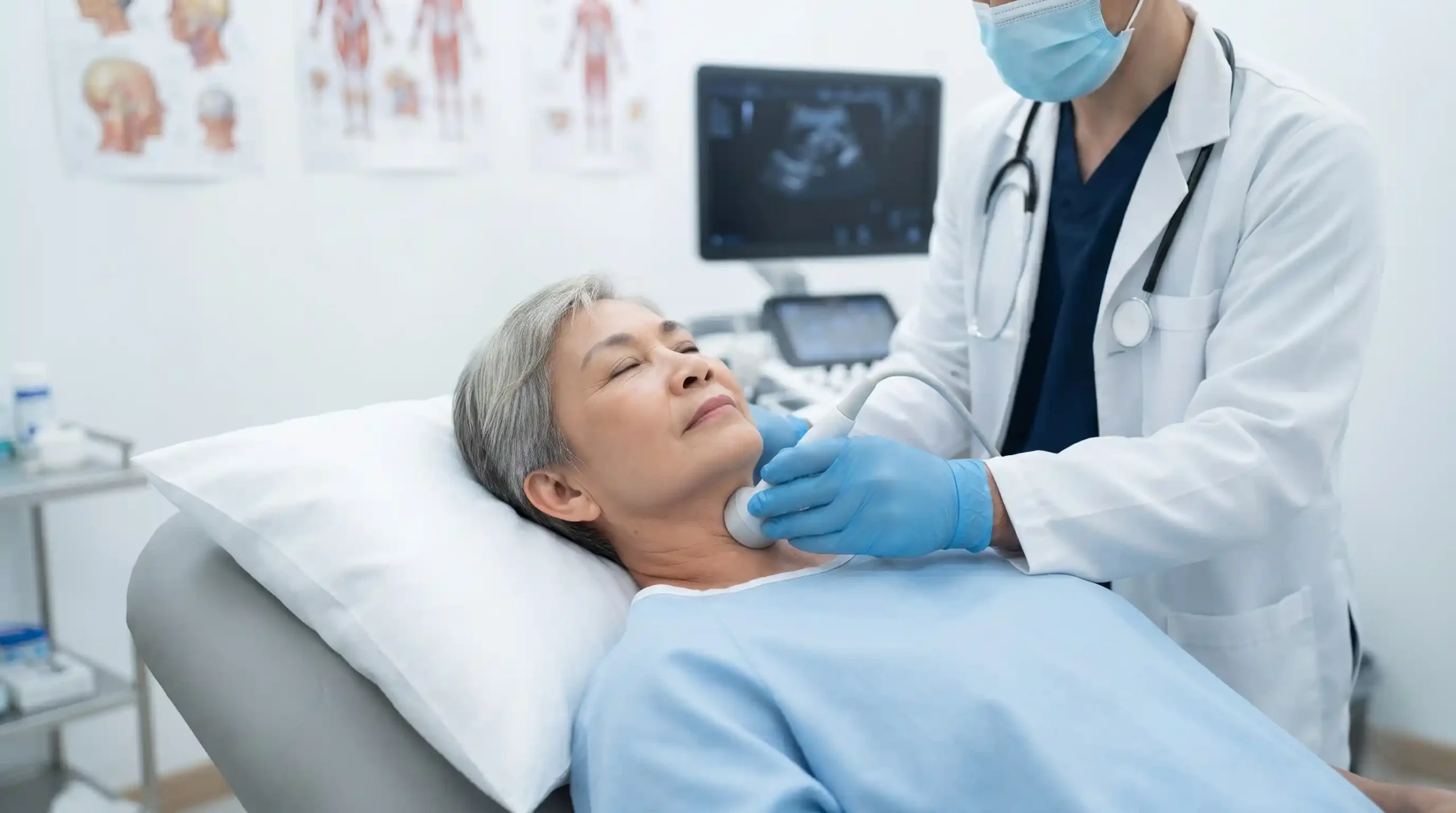
Pearl Dental Kochi is recognized as a premier center for specialized TMJ and jaw pain therapy in Thrippunithura and Ernakulam. Led by specialist Dr. Frederick Williams, our clinic features 3D CBCT joint imaging, digital bite analysis, custom neuromuscular splints, and therapeutic laser care in Kochi.
Specialized TMJ & Jaw Pain Treatment in Kochi
Hospital-Grade Orofacial Pain Management, Joint Decompression, and Permanent Bite Balance
- Home
- TMJ Pain Treatment
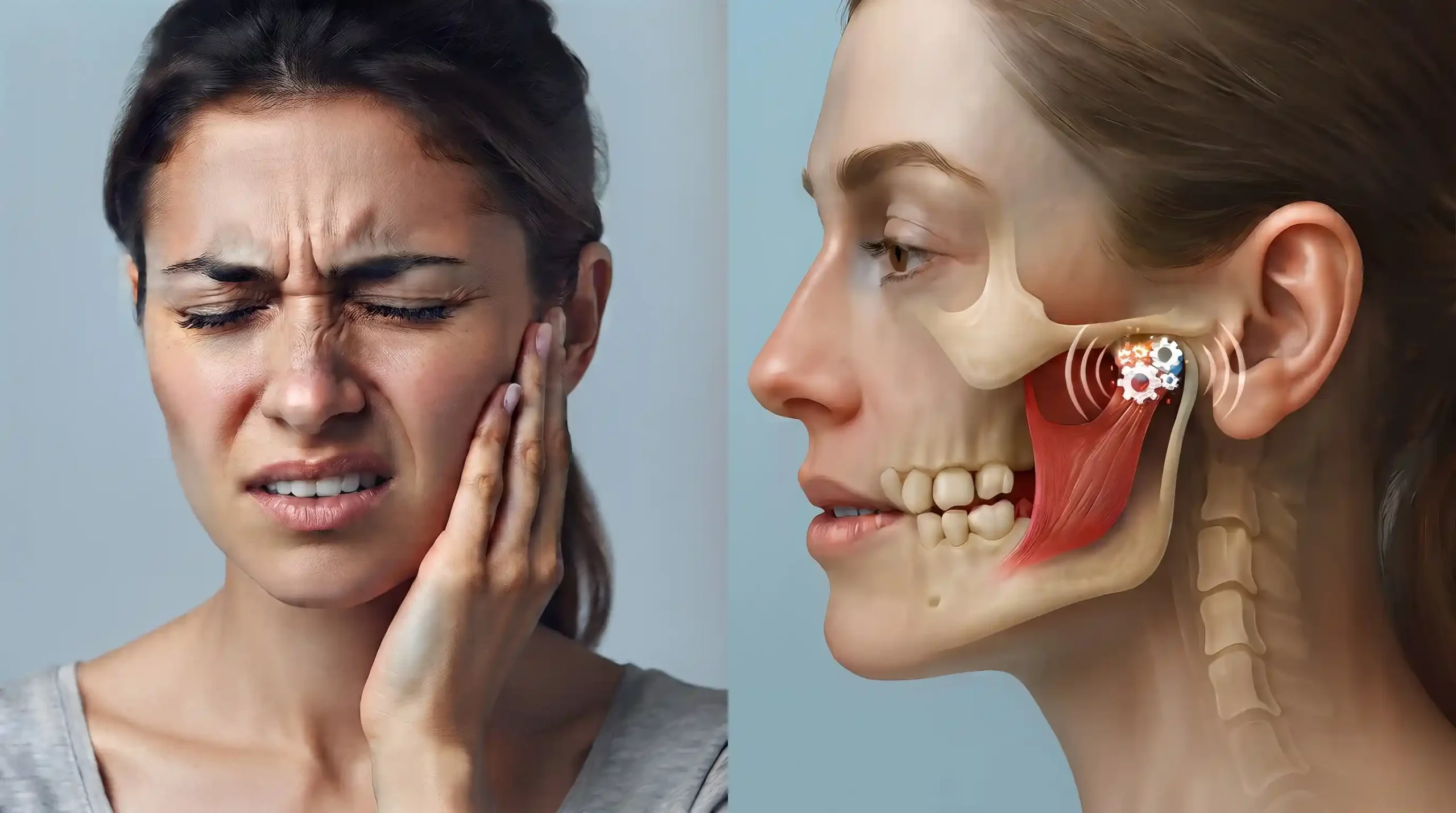
The Temporomandibular Joint (TMJ) is the complex sliding hinge connecting your lower jawbone (mandible) to your skull. You have two TMJs, one on each side of your face directly in front of your ears. They allow your jaw to move up, down, forward, and side-to-side for chewing, speaking, and yawning.
TMJ Dysfunction (TMD) occurs when the delicate articular disc inside the joint slips out of position, or when the surrounding chewing muscles (masseter and temporalis) become hyperactive due to stress, tooth grinding (bruxism), or bite misalignments.
At Pearl Dental, our comprehensive diagnostic protocols isolate the root cause, whether structural joint damage or muscle spasms to deliver long-term relief without relying on lifelong painkillers.
What Is TMJ Dysfunction (TMD)?
The Temporomandibular Joint (TMJ) is the complex sliding hinge connecting your lower jawbone (mandible) to your skull. You have two TMJs, one on each side of your face directly in front of your ears. They allow your jaw to move up, down, forward, and side-to-side for chewing, speaking, and yawning.
TMJ Dysfunction (TMD) occurs when the delicate articular disc inside the joint slips out of position, or when the surrounding chewing muscles (masseter and temporalis) become hyperactive due to stress, tooth grinding (bruxism), or bite misalignments.
At Pearl Dental, our comprehensive diagnostic protocols isolate the root cause, whether structural joint damage or muscle spasms to deliver long-term relief without relying on lifelong painkillers.
Advanced TMJ Modalities at Pearl Dental
TMJ relief requires a tailored approach. We utilize advanced diagnostic technology and conservative, non-invasive therapies to resolve joint inflammation and restore proper bite alignment:
3D CBCT Joint Imaging
High-resolution 3D imaging visualizes joint bone contours, condyle placement, and airway space down to the millimeter.
Digital Occlusal Analysis
Electronic bite mapping measures exact pressure distribution across individual teeth during chewing.
Custom Neuromuscular Splints & Night Guards
Precision-molded, medical-grade appliances that deprogram hyperactive jaw muscles, decompress the joint space, and shield tooth enamel from grinding damage.
Low-Level Laser Therapy (LLLT)
Therapeutic cold laser light penetrates deep into inflamed jaw muscles and ligaments to accelerate tissue healing, reduce inflammation, and relieve pain naturally.
Selective Occlusal Equilibrium & Orthodontics
Micro-adjustments to high bite spots or orthodontic alignment to balance biting forces permanently across your jaws.
Common Causes & Symptoms of TMJ Pain
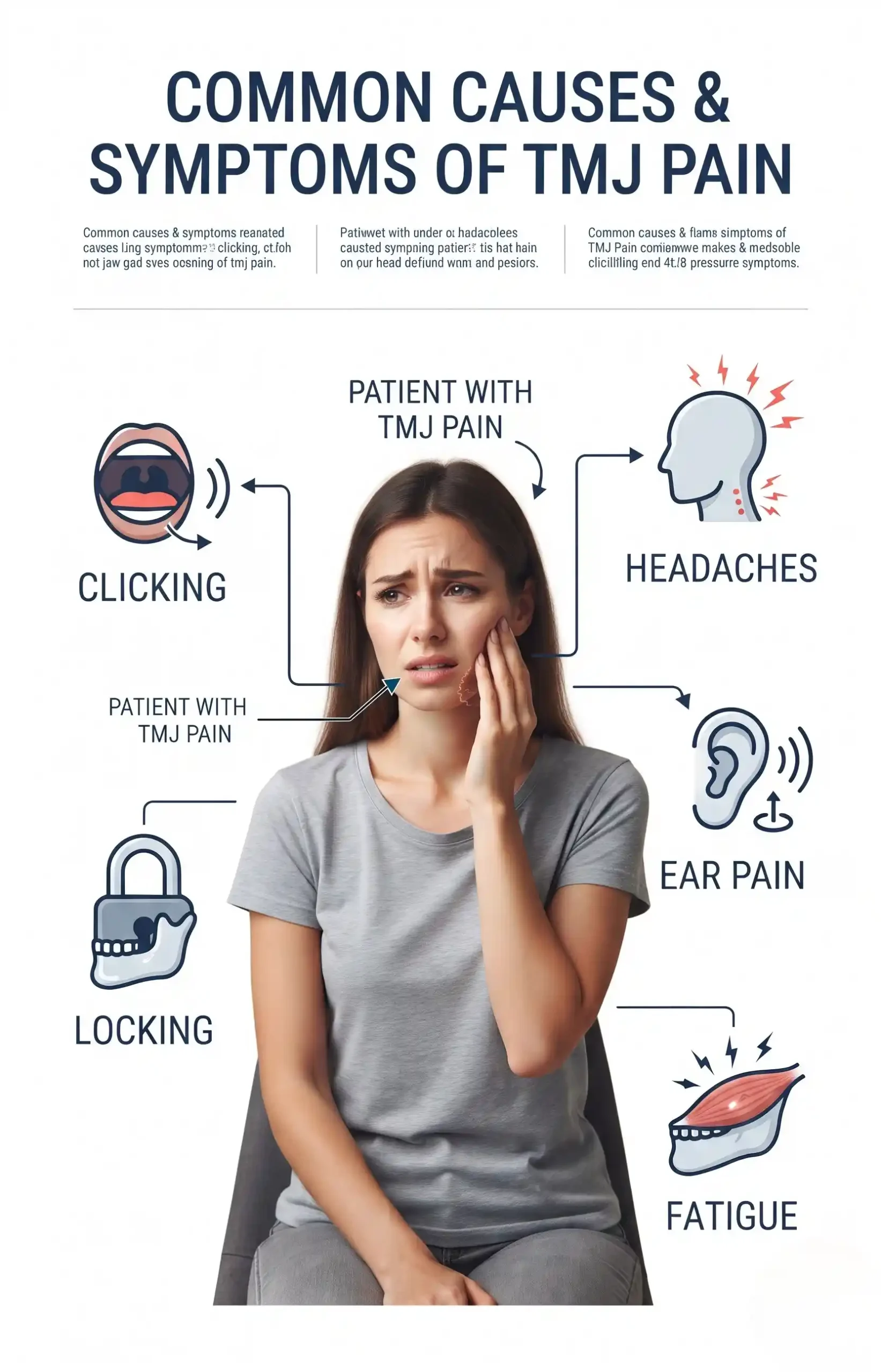
TMJ problems rarely develop overnight. They stem from a combination of anatomical, dental, and lifestyle factors:
Common Triggers
- Bruxism & Nighttime Teeth Grinding: Unconscious clenching exerts hundreds of pounds of pressure on joint cartilage and jaw muscles.
- Malocclusion & Unbalanced Bite: Missing teeth, uneven crowns, or crooked teeth force the lower jaw to shift into an unnatural position during chewing.
- Joint Disc Displacement: The protective cartilage disc between the jaw head and skull slips forward, causing clicking, popping, or painful jaw locking.
- Stress & Muscle Clenching: Psychological stress triggers involuntary jaw muscle contraction, leading to chronic muscle fatigue and tension.
- Past Jaw Trauma or Whiplash: Direct impacts or sudden neck acceleration can strain delicate joint ligaments.
Key Warning Symptoms
- Clicking, Popping, or Grating Sounds: Audible noises when opening or closing your mouth.
- Jaw Locking or Restricted Opening: Difficulty opening your mouth fully (trismus) or feeling like your jaw gets stuck.
- Chronic Unexplained Headaches: Morning tension headaches radiating from the temples down into the neck and shoulders.
- Ear Pain & Fullness (Tinnitus): Deep earaches, ringing in the ears, or a clogged sensation without an active ear infection.
- Facial Muscle Fatigue: A sore, tired jaw feeling after meals or upon waking up in the morning.
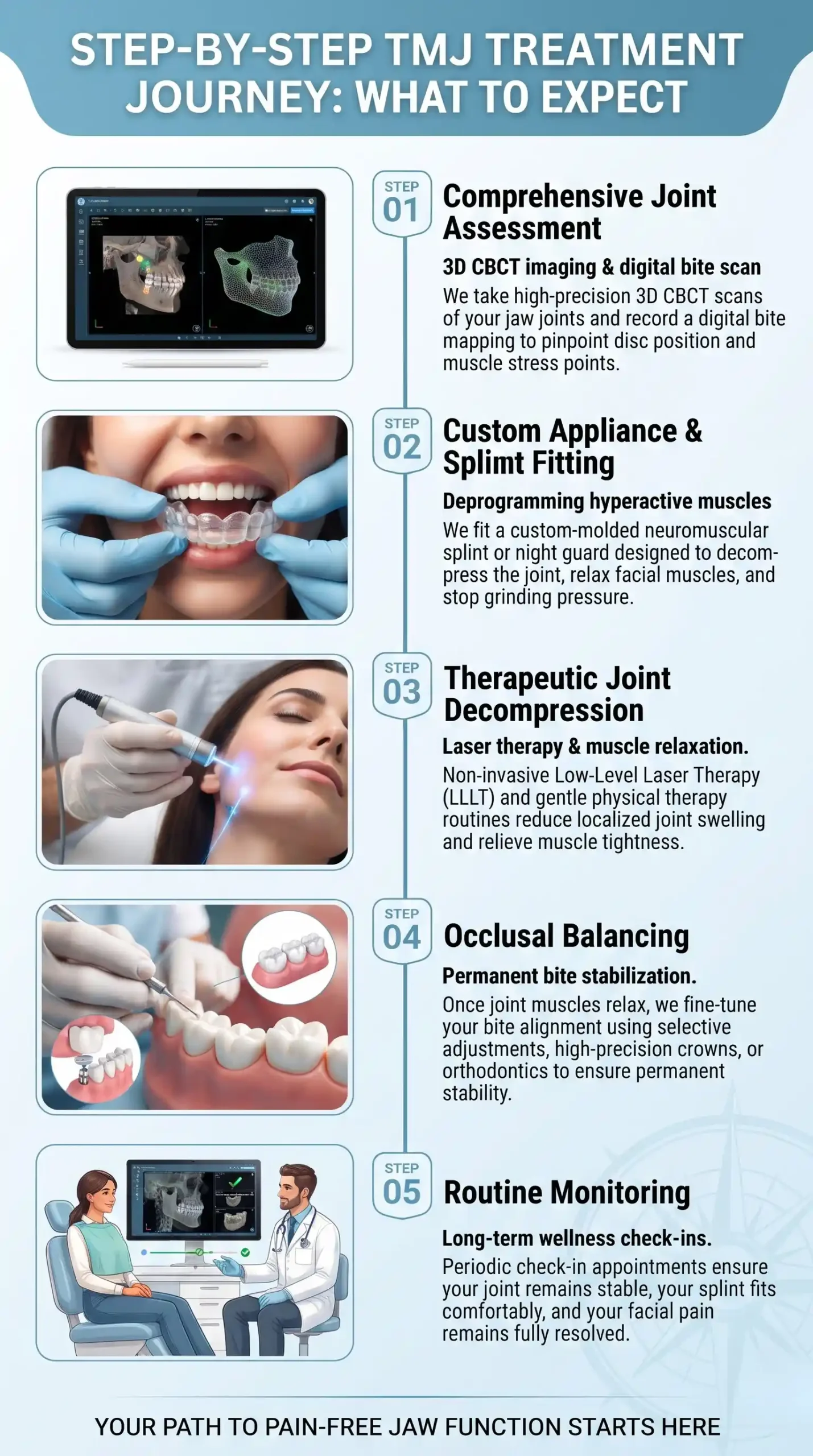
Step-by-Step TMJ Treatment Journey: What to Expect
-
01
Comprehensive Joint Assessment
3D CBCT imaging & digital bite scan. We take high-precision 3D CBCT scans of your jaw joints and record a digital bite mapping to pinpoint disc position and muscle stress points.
-
02
Custom Appliance & Splint Fitting
Deprogramming hyperactive muscles. We fit a custom-molded neuromuscular splint or night guard designed to decompress the joint, relax facial muscles, and stop grinding pressure.
-
03
Therapeutic Joint Decompression
Laser therapy & muscle relaxation. Non-invasive Low-Level Laser Therapy (LLLT) and gentle physical therapy routines reduce localized joint swelling and relieve muscle tightness.
-
04
Occlusal Balancing
Permanent bite stabilization. Once joint muscles relax, we fine-tune your bite alignment using selective adjustments, high-precision crowns, or orthodontics to ensure permanent stability.
-
05
Routine Monitoring
Long-term wellness check-ins. Periodic check-in appointments ensure your joint remains stable, your splint fits comfortably, and your facial pain remains fully resolved.
Which is the best clinic for TMJ and jaw pain treatment in Kochi?
Can TMJ disorder cause ear pain, ringing, and headaches?
Yes! Because the TMJ rests millimeters away from the ear canal and shares nerve pathways (trigeminal nerve) with the head and neck, joint inflammation frequently causes deep earaches, ringing in the ears (tinnitus), a full/clogged ear sensation, and chronic temple headaches.
Will I need surgery for my TMJ disorder?
No. Over 90% of TMJ cases are successfully resolved using conservative, non-surgical therapies such as custom splints, Low-Level Laser Therapy, muscle deprogramming, and bite balancing. Surgery is reserved as an absolute last resort for severe structural joint ankylosis or trauma.
What is the difference between a store-bought mouthguard and a custom TMJ splint?
Generic over-the-counter guards are made from soft, squishy plastic that can actually stimulate nighttime chewing and worsen muscle strain. A custom neuromuscular splint from Pearl Dental is precision-engineered from hard medical resin to decompress joint spaces, relax muscles, and balance your specific bite profile.
How long does TMJ pain relief take?
Most patients experience noticeable muscle relaxation and pain reduction within 1 to 3 weeks of consistent custom splint wear and therapeutic laser sessions. Full joint stabilization and bite balancing generally occur over 2 to 4 months.
Blogs