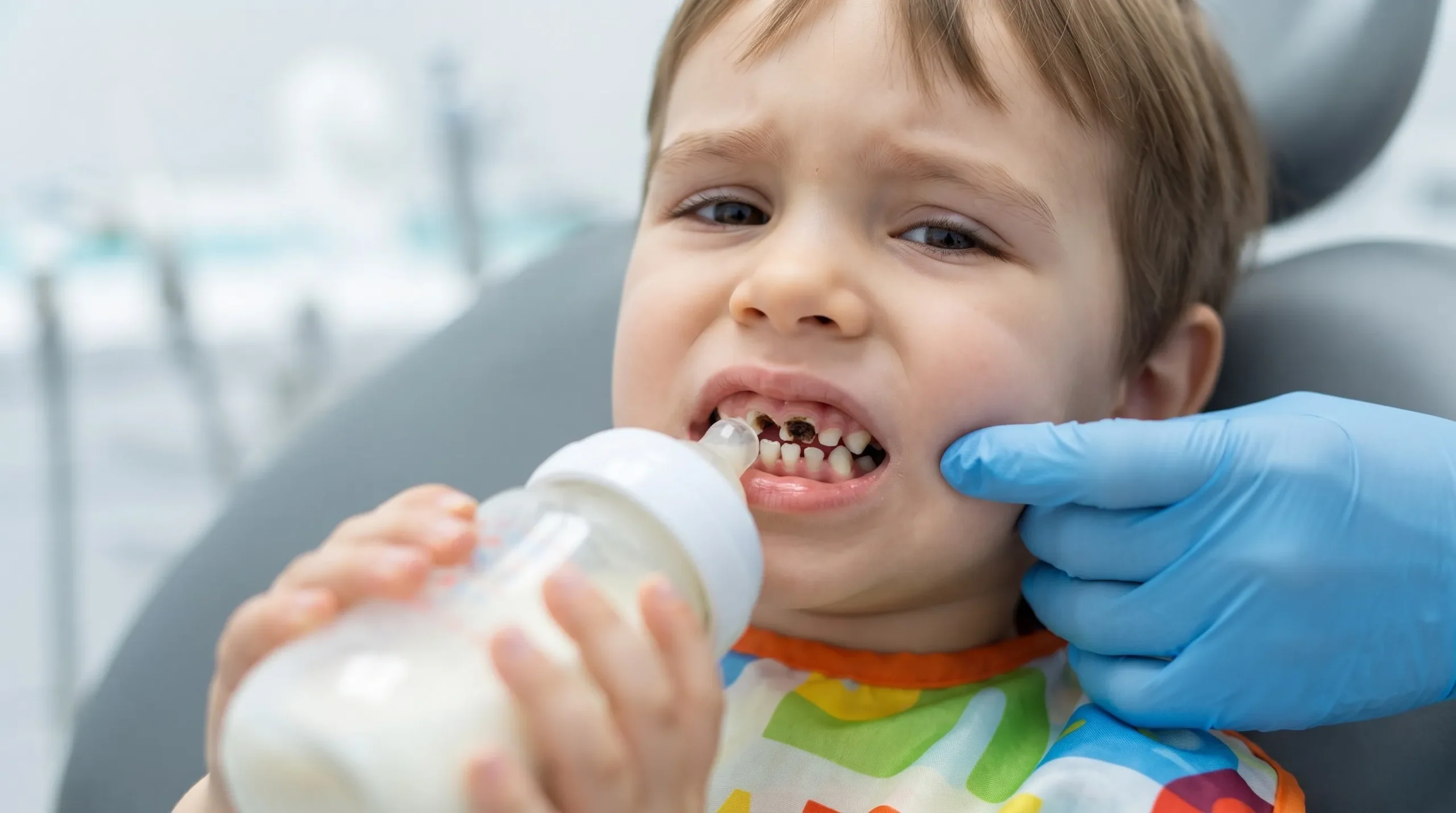
Early Childhood Caries (ECC)—commonly referred to by parents as “Baby Bottle Tooth Decay”—is one of the most widespread chronic conditions affecting infants and toddlers worldwide. It is aggressive, fast-moving, and can cause significant dental pain in very young children.
The encouraging news? Early Childhood Caries is almost 100% preventable with simple modifications to your child’s daily and nightly feeding routines.
What Causes Baby Bottle Tooth Decay?
Baby Bottle Tooth Decay happens when an infant’s developing teeth are exposed to liquids containing natural or added sugars for extended periods throughout the day or night.
It is important to remember that almost all infant liquids—including breast milk, infant formula, cow’s milk, fruit juices, and sweetened drinks—contain natural sugars. When an infant falls asleep with a bottle resting in their mouth, or nurses continuously throughout the night, these liquids pool directly around the upper front teeth.
Sugary Liquids (Milk, Formula, Juice)
+
Oral Bacteria & Time Overnight
│
▼
Acid Production ──► Rapid Enamel Erosion ──► Early Childhood Caries
During sleep, a child’s natural salivary flow drops significantly. Saliva is the mouth’s natural defense system—it rinses away food particles and neutralizes bacterial acids. Without active saliva flow, cavity-causing bacteria feed on the pooled sugars uninterrupted all night, producing concentrated acids that erode delicate enamel.
Crucial Steps to Shield Your Child’s Teeth
Keep Nighttime Bottles Filled ONLY with Water: Never put your child to bed with a bottle containing milk, formula, juice, or sweetened liquids. If your toddler relies on a bottle to fall asleep, fill it exclusively with plain, clean water. If they resist, gradually dilute their milk with water over 10 to 14 days until it is 100% water.
Wipe Gums and Teeth After Late Feeds: Whether you are bottle-feeding or nursing, keep a damp cloth or soft silicone finger brush by your nightstand. Gently wipe your baby’s teeth and gums clean immediately after their late-night feed before settling them back into their crib.
Never Coat Pacifiers in Sweeteners: Dipping pacifiers in honey, syrup, or juice bathes teeth in concentrated sugar. (Note: Honey should never be given to infants under 12 months due to the risk of infant botulism).
Transition to an Open Cup by Age 1: Sippy cups with non-drip valves act much like bottles, encouraging children to wander around sipping sugary liquids continuously. Encourage your child to practice drinking from an open cup or a straw cup by their first birthday.
Check Their Teeth Regularly at Home: Lift your child’s top lip once a month to look at their teeth. Look for dull, chalky-white spots or bands along the gumline. These spots are early signs of enamel demineralization. If caught at this stage, your pediatric dentist can reverse the process using professional fluoride treatments!