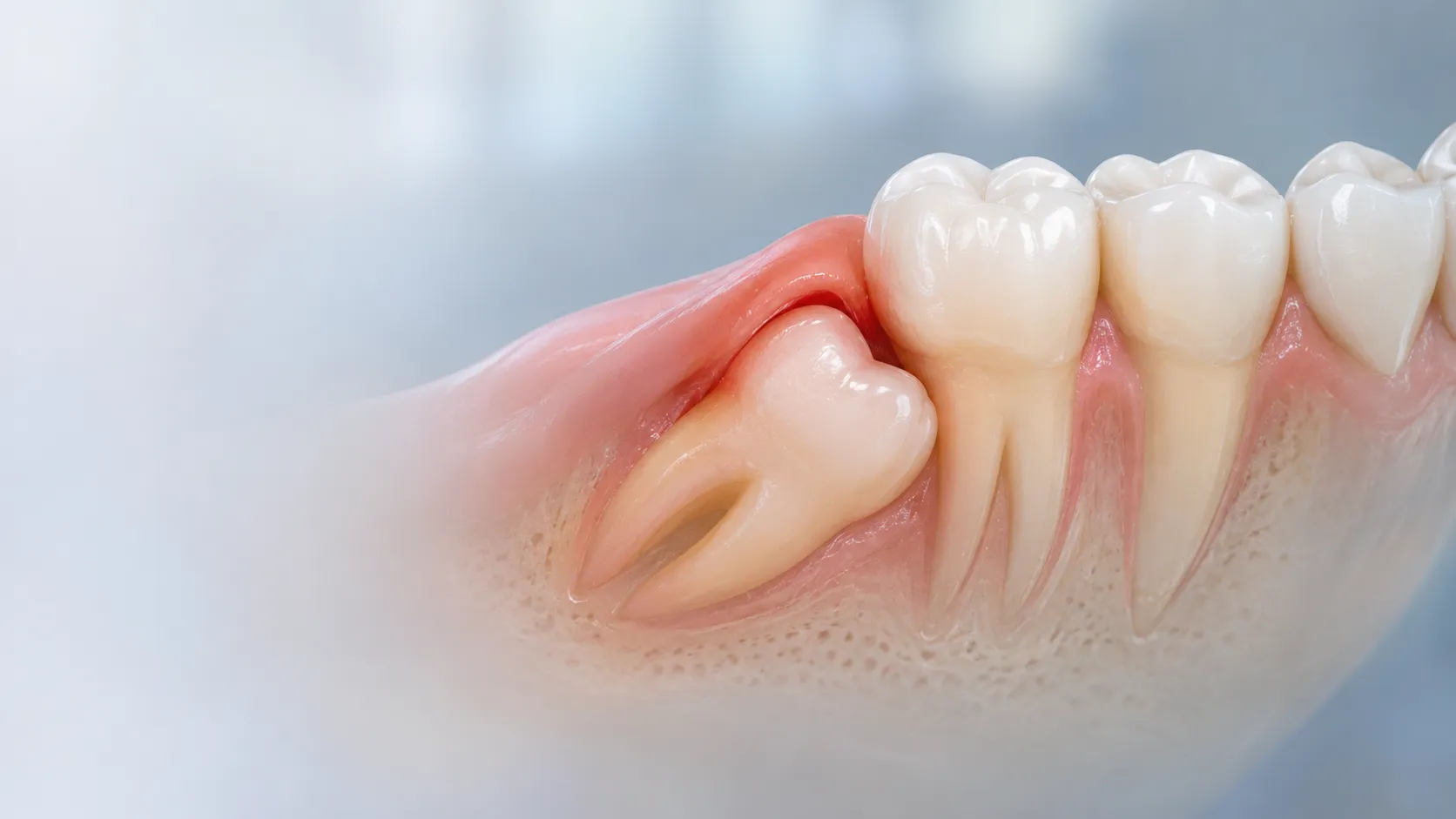
Wisdom tooth pain often begins as a faint, dull ache at the back of your jaw that seems easy to brush off or manage with an over-the-counter painkiller. However, because third molars emerge at difficult angles in the very back of the mouth, they are inherently challenging to keep clean. What starts as minor pressure can rapidly turn into a aggressive, spreading bacterial infection.
If you are experiencing jaw discomfort in Kochi, recognizing the difference between minor tooth eruption pressure and a true dental emergency will protect your oral health and prevent severe systemic complications.
Body
Understanding the underlying signals your body is sending can help you determine whether you need an urgent same-day evaluation at a specialized clinic:
Severe, Rapidly Progressing Swelling in the Cheek, Jaw, or Neck:
Visible facial asymmetry or tenderness along your jawline indicates that a localized bacterial infection has breached the tooth socket.
When infection spreads into deep soft tissue spaces (such as the submandibular space), it can cause rapid facial swelling that requires urgent surgical drainage and hospital-grade antibiotic intervention.
Trismus (Extreme Difficulty or Pain When Opening Your Mouth):
Lower wisdom teeth sit directly adjacent to the primary muscles responsible for chewing (such as the masseter and pterygoid muscles).
Severe inflammation around an impacted tooth triggers reflex muscle spasms known as trismus. If you can no longer fit two fingers vertically between your front teeth, your infection requires immediate emergency care.
Throbbing, Unrelenting Pain Radiating to Your Ear, Temple, or Neck:
Unlike standard toothaches, severe wisdom tooth pain often follows major cranial nerve pathways—specifically the trigeminal and inferior alveolar nerves.
This creates a deep, throbbing headache or earache that over-the-counter analgesics fail to soothe, keeping you awake throughout the night.
Active Pus Discharge (Suppuration) and a Persistent Foul Taste:
Partially erupted teeth create a deep pocket of gum tissue known as an operculum (pericoronitis).
Food particles become trapped under this flap, creating a ideal environment for anaerobic bacteria. If pressing gently on your gum releases bad-tasting fluid or pus, the area is actively infected.
High Fever, Chills, and Difficulty Swallowing:
A fever accompanied by wisdom tooth pain is a clear warning sign that your body’s immune system is attempting to fight an advancing infection.
If you experience pain or difficulty when swallowing liquids or opening your throat, seek immediate surgical attention to keep your airway safe and clear.
Conclusion
Wisdom tooth pain should never be left to “wait and see.” What begins as localized gum irritation can quickly develop into a severe, high-risk infection. Prompt clinical assessment supported by high-precision 3D CBCT imaging can locate the exact source of pressure, eliminate pain, and restore your health safely.
Are you experiencing severe jaw pain or swelling? Don’t wait for the pain to escalate. Contact Pearl Dental Kochi immediately for priority emergency care. Call +91 799 411 3244 or visit our Thrippunithura clinic near Vadakkekotta Metro Station.